Bout Betting in Boxing Explained: What It Means & How It Works
Boxing offers plenty of ways to bet, and “bout betting” is simply about focusing on a single match. Rather than looking at a fighter’s career or a whole tournament, it zeroes in on what might happen in one scheduled bout.
In this blog post, you’ll find the main bout markets explained, how odds are shown and what they mean, plus how potential payouts are worked out. We also cover in-play betting, early stoppages and settlement rules, what shifts prices before the first bell, and the common pitfalls to watch out for.
Read on to learn more.
What Is Bout Betting In Boxing?
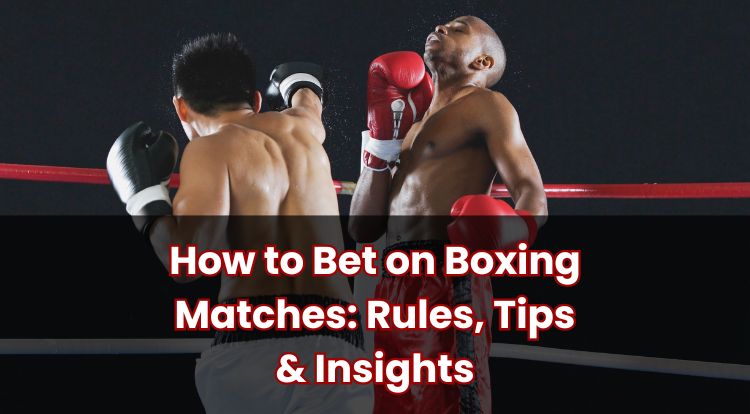
Bout betting in boxing means placing a wager on the outcome or specific elements of one scheduled fight. It is about the head-to-head meeting between two boxers, not a run of results across a tournament or a season.
Within a single bout, there are many angles to consider. Some bets focus on who will be declared the winner, while others look at how the fight ends or how many rounds are completed. The appeal comes from having several clear ways to engage with one contest.
Once that idea lands, the next step is seeing how this approach differs from broader boxing markets.
How Is Bout Betting Different From Other Boxing Bets?
Bout betting is tied to one fight and is normally settled as soon as the official result is announced. The markets revolve around that single event: the winner, the method of victory, or the round in which the result occurs.
By contrast, outright or futures bets look further ahead. They might involve backing a potential champion in a weight class or predicting the outcome of a tournament. Those wagers depend on multiple matches and can take weeks or months to be resolved.
With the distinction clear, it becomes easier to choose the market that fits your view of the fight. From there, the main bout bet types are straightforward to navigate.
Types Of Bout Bets You Can Place
There are several common bout markets available on most boxing matches. Each one looks at the contest from a different angle, allowing you to decide which outcome you want to back.
Moneyline (Win) Bets
This is a simple bet on which boxer will be declared the winner. It does not matter how the victory happens, only that your chosen fighter is the one announced as having won.
Rounds Bets
Rounds markets focus on how long the fight lasts. Some ask for the exact round the contest ends, while others are framed as over or under a specified number of completed rounds, or whether the fight goes the distance.
Method Of Victory Bets
Here the interest is in how the result is achieved. Options typically include knockout (KO), technical knockout (TKO), points (decision), or disqualification. Your pick must match the official method recorded.
Round Range Bets
Instead of naming a single round, these markets group rounds together, such as 1 to 3 or 7 to 9. If the fight ends within your chosen bracket, the bet is settled as a winner.
Bout Props And Specials
Props look at specific events within the fight that are not directly about who wins. Examples include whether there will be a knockdown, whether both fighters will be knocked down, or totals such as punches landed. Availability varies by operator and by bout.
However you prefer to play it, all these markets link back to a single contest. That means the odds are the next piece of the puzzle.
How Do Boxing Odds Work And How Do I Read Them?
Boxing odds show the potential return from a wager and indicate how likely an outcome is considered by the bookmaker. In the UK, fractional odds such as 4/1 or 1/3 are the most common.
Fractional odds express profit relative to stake. At 4/1, you stand to win £4 profit for every £1 staked, plus your £1 stake returned. At 1/3, a £3 stake would return £1 profit, plus the £3 stake. Decimal odds are also used by some sites and show the total return per £1 staked, including your stake.
Once you are comfortable reading prices, working out possible returns becomes much simpler.
How To Calculate Your Payout From A Bout Bet?
With fractional odds, potential profit is found by multiplying your stake by the first number in the fraction and then dividing by the second. Add your original stake to that profit to get the total payout.
For example, a £5 stake at 3/1 would return £15 profit, and £20 in total once the stake is included. If the odds were 1/4 and the stake £8, the profit would be £2 and the total payout £10.
Most betting sites show the potential return on the bet slip before you confirm, which makes double-checking straightforward.
How Does In-Play Bout Betting Work?
In-play bout betting lets you place wagers after the opening bell. Prices move during the contest to reflect what is happening in real time, and markets can open or suspend quickly around key moments.
Depending on the stage of the fight, you might see live markets for the winner, the round a stoppage could occur, or the method of victory. Odds update frequently, and any in-play bet is settled according to what happens after it is placed.
Online platforms usually have a dedicated live section, and markets may close without warning if the action heats up. Setting sensible limits beforehand helps keep things in check.
Live betting also raises a practical question: what happens if a fight does not reach the final bell?
What Happens If A Bout Is Stopped Early Or Declared No Contest?
If a bout ends earlier than scheduled, settlement depends on how and why it finished and on the operator’s rules. When a bout is declared a no contest, often due to an accidental injury or an external incident, most operators void related bets and return stakes.
If there is an official result, such as a TKO, disqualification, or points decision, markets are generally settled in line with that announcement. Some round and method bets will still be valid depending on the timing and nature of the stoppage.
Because policies can differ, it is worth checking the specific rules for the bout and market you are backing.
That leads naturally to how round and method markets are handled once a result is in.
How Are Round And Method Bets Settled?
Round and method bets are settled using the official result recorded by the referee and judges. For round bets, the winning selection is the exact round in which the result occurs. For instance, if a stoppage happens in round four, bets on round four win.
Method of victory bets follow the manner of the result noted at ringside, such as KO, TKO, decision, or disqualification. If there is any uncertainty or an appeal in progress, settlement is usually paused until the outcome is confirmed.
Operators publish house rules that cover details such as retirements between rounds, so a quick check before placing a bet is sensible.
What Factors Cause Odds To Move Before A Bout?
Prices change for many reasons in the build-up to a fight. Bookmakers react to both information and betting patterns to keep their markets balanced.
Heavy backing for one fighter often shortens that price and lengthens the opponent’s. News about preparation can also shift the market, including injuries, illness, sparring reports, or issues at the weigh-in such as missing weight. Late changes to the undercard, trainer comments, or reliable media reports can have an effect too.
In short, odds movement reflects evolving information and market pressure rather than a prediction of the final result. Knowing that helps frame expectations as the fight approaches.
Knowing why prices move is one thing; avoiding the traps that catch people out is another.
Common Mistakes To Avoid When Betting On Bouts
A frequent error is backing a market without fully understanding how it is settled. Not all round or method bets work the same way, and small differences in rules can change outcomes.
Another pitfall is relying on reputation over recent evidence. Styles, conditioning, and activity levels matter. A fighter returning from injury, moving weight, or changing trainers may not perform as past results suggest.
Following tips without checking the source is risky. It helps to read a range of reliable reports, watch recent bouts where possible, and be clear about what the price already reflects.
Chasing losses or raising stakes to recoup a setback can also make matters worse. A clear plan, modest stakes, and a set budget keep betting under control.
If gambling starts to affect your well-being or finances, seek support early. Organisations such as GamCare and GambleAware provide free, confidential help. With a solid grasp of the markets, a handle on the odds, and sensible limits, bout betting can be approached with more confidence and care.
**The information provided in this blog is intended for educational purposes and should not be construed as betting advice or a guarantee of success. Always gamble responsibly.